
Interpretations
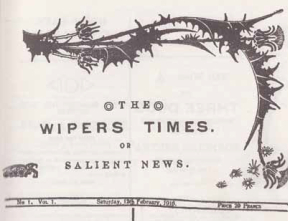
Teaching ‘the lesson of satire': using The Wipers Times to build an enquiry on the First World War ‘Blackadder for real' is how the British journalist and broadcaster, Ian Hislop, characterised The Wipers Time, the newspaper published on the front line by members of the 12th Battalion Sherwood, and recently...
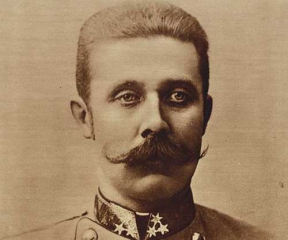
As I write this article I have before me my grandfather's Victory Medal from the First World War. It has inscribed on the reverse side, ‘The Great War for Civilisation 1914-1919'. The absolute certainty of such a justification for Britain's entry into the war seems somewhat hollow as we approach...

This issue's problem: Helena Swannick tends to treat differences between historical interpretations simply as matters of opinion. Helena Swannick is a career changer who has decided to come into teaching after many years' working in human resources and some time at home caring for two young children. Her degree was...
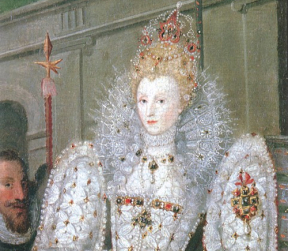
Elizabeth I is admired today for her power dressing and her power portraits; her political acumen and her success in a man's world. The adulation of Elizabeth started during her own lifetime when she was praised as a goddess and even as a celestial power. Elizabeth's semi-mythical status is reflected...
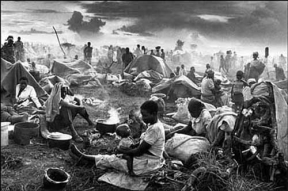
Connecting the dots: helping Year 9 to debate the purposes of Holocaust and genocide education Why do we teach about the Holocaust and about other genocides? The Holocaust has been a compulsory part of the English National Curriculum since 1991; however, curriculum documents say little about why pupils should learn...
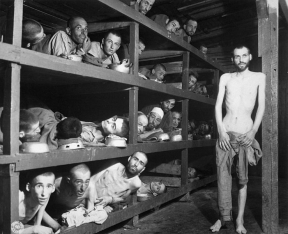
In August 1945, Zalman Grinberg, a doctor from Kovno and spokesman for the Liberated Jews in the American Zone of Germany, addressed 1,700 Jewish survivors. ‘What is the logic of destiny to let these individuals remain alive?!' he asked them: We are free now, but we do not know what...

The workhouse has long held a negative reputation in the popular imagination as the dreaded destination of the destitute, an institution guaranteed to strike fear into the hearts of the Victorian poor. This is partly owing to its design under the New Poor Law of 1834 as an explicit punishment...
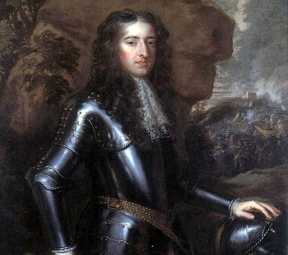
John Morrill, one of the foremost historians of the British civil wars, has described the events of 1688-9 as the ‘Sensible Revolution'. The phrase captures the essence of a long-standing scholarly consensus, that this was a very unrevolutionary revolution. The origins of this interpretation go back to the late eighteenth...

This enquiry is about how interpretations are formed and why they change. It aims to show Year 9, right at the end of their study of British history, the ways in which meanings of 1688 have shifted over time. It will test students' knowledge and strengthen their chronology of 300...
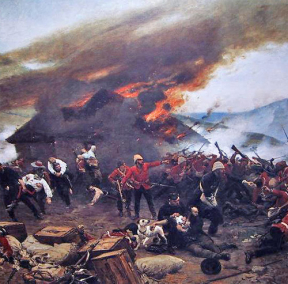
Do we need another hero? Year 8 get to grips with the heroic myth of the Defence of Rorke's Drift in 1879 Mike Murray shares a lesson sequence in which his students examined changing interpretations of the Battle of Rorke's Drift in 1879. Building on earlier work on teaching interpretations...
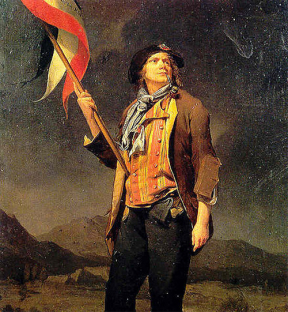
For most of the last two centuries, historical interpretations of the French Revolution have focused on its place in a grand narrative of modernity. For the most ‘counter-revolutionary' writers, the Revolution showed why modernity was to be resisted - destroying traditional institutions and disrupting all that was valuable in an...
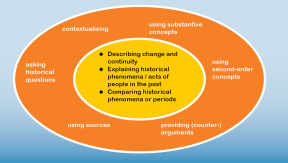
Historical reasoning in the classroom: What does it look like and how can we enhance it? The history education community has long recognised that historical thinking depends on the interplay between substantive knowledge about the past and the procedural, or second-order, concepts that historians use to construct, shape and give...
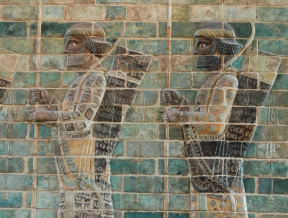
Truth-loving Persians do not dwell upon The trivial skirmish fought near Marathon. So begins Robert Graves' poem, The Persian Version. The conceit of the poem is to invert the standard narrative of the Persian war of the early fifth century BC - a narrative drawn from Greek sources such as...
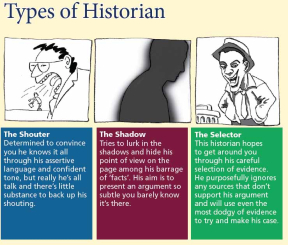
Keeley Richards secured a fundamental shift in some of her Year 13 students' ability to argue. She did it by getting them to engage more fully with the practice of argument itself, as enacted by four historians. At the centre of her lesson sequence was an original activity: the historians'...
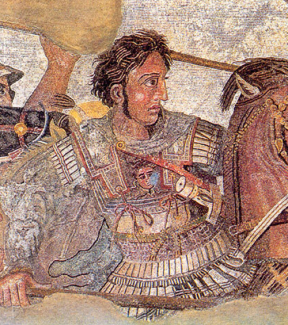
Did Alexander really ask, ‘Do I appear to you to be a bastard?' Using ancient texts to improve pupils' critical thinking Beth Baker and Steven Mastin make the case for teaching ancient history in the post-14 curriculum. Pointing out the damaging messages that could be conveyed by assuming that ancient...
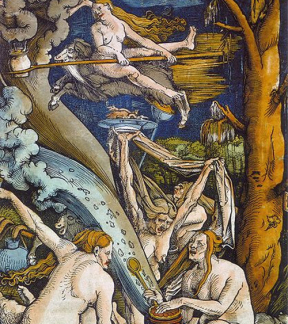
Witchcraft is serious history. 1612 marks the 400th anniversary of England's biggest peacetime witch trial, that of the Lancashire witches: 20 witches from the Forest of Pendle were imprisoned, ten were hanged in Lancaster, and another in York. As a result of some imaginative commemorative programmes, a number of schools...
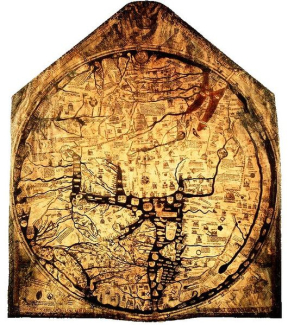
In recent decades, a novel approach to history has emerged, called ‘big history', which provides an overview of all of human history, embedded within biological, geological and astronomical history covering the grandest sweep of time and space, from the beginning of the universe to life on Earth here and now....
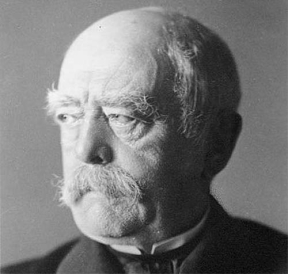
Peter Gray explains how his Year 12 students came to research and write a resource on the history of Zambia, for history teachers in Zambia. The construction of the resource stretched the Year 12 students in new ways: the Internet was useless and there were no easy digests in A-Level...
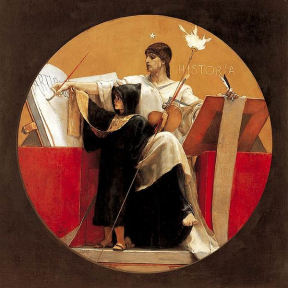
Please note: This unit was produced before the 2014 National Curriculum and therefore while much of the advice is still useful, there may be some out of date references or links. For more recent resources on key concepts, see our What's the Wisdom on series. The key concepts can be...
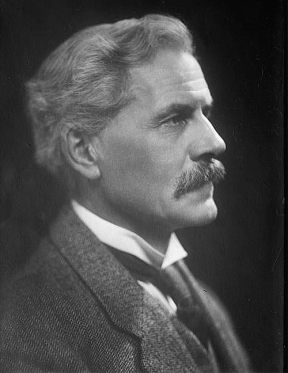
For students of my generation (born in 1954) the 1930s had a very clear identity; so, when the far-left Socialist Workers Party launched a campaign against unemployment, in 1975, with the slogan: ‘No Return to the Thirties', we all knew what they meant: unemployment, economic deprivation and the political betrayal...