
Interpretations
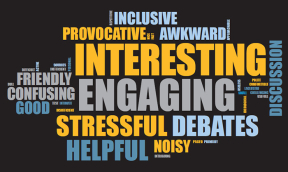
Struck by their sixth-form students’ self-doubt when asked to make an historical claim, teachers Carina Ancell and Alan Kunna went in search of ways to build their students’ confidence. A fruitful discussion with university lecturers Toby Green and Chris Dillon, about the challenges faced by first-year undergraduates in seminar discussion,...
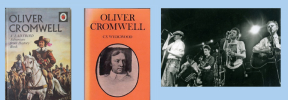
Determined to do justice to the complexity of the seventeenth century, as a messy but crucial period in British history, and to develop their pupils’ disciplinary understanding of how and why interpretations of the past are constructed, Dan Keates and his department set out to exploit the rich seam of...
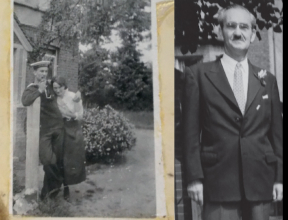
Alex Benger asks whether the mode of enquiry adopted by cultural historians, the construction of webs of past meaning from past perspectives, is underexplored in school history. Benger used a cultural history approach in his building of an enquiry for Year 9 around one man’s experience of the First World...

We’ve been talking to our secondary school members and we know how difficult life is for teachers in the current circumstances, so we wanted to lend a helping hand. 'What’s the wisdom on…' is a new and already popular feature in our secondary journal Teaching History and provides the perfect...
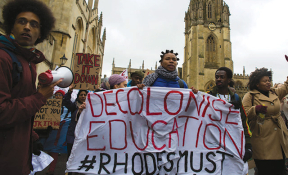
Decolonisation is a contested term. When first used in 1952, it referred to a political event: a colony gaining independence; it has since come to describe a process. When, where and why this process began, however, and whether it has ended, are all fiercely debated. Is it about new flags...
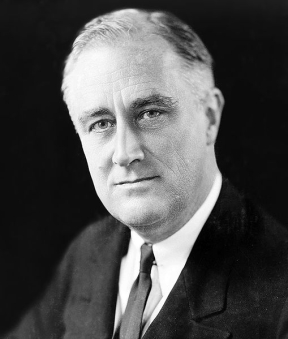
Over 50 years ago I read my first serious book on American history. I can still remember the excitement of reading William E. Leuchtenburg’s Franklin D. Roosevelt and the New Deal, 1932–1940. His description of FDR and American politics in the 1930s seemed so much more colourful and dramatic than...
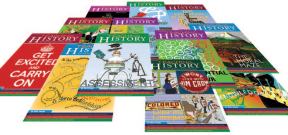
How often do your pupils actually look at the products of historians – their scholarly writing, their debates, their to-and-fro of argument? What's the Wisdom On... is a short guide providing new history teachers with an overview of the ‘story so far’ of practice-based professional thinking about a particular aspect...
David Hibbert and Zaiba Patel decided to work together after becoming concerned that school history curricula might not enable students to interrogate popular British mythologising about World War II. Building on these pre-existing concerns, their collaboration with the historian Yasmin Khan yielded an Interpretations enquiry which asked students to consider...
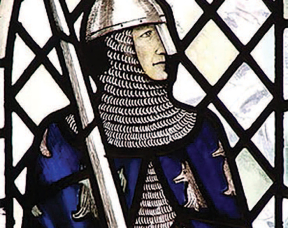
Michael Bird and Thomas Wilson focus their attention directly on the voices of pupils, in dialogue with their teacher and with each other, as they draw inferences from differing sources about the Norman legacy in Chester. By carefully examining dialogue stimulated by these sources, Bird and Wilson demonstrate not only...
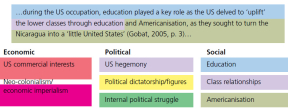
It is a charge commonly laid at history teachers that we, myopically, teach only the same-old same-old. Steven Driver has taken extreme steps to avoid this by focusing on a particular neglected event – the American occupation of Nicaragua in the early twentieth century – as part of his preparation...
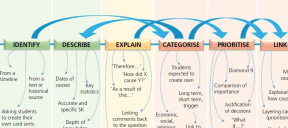
The disapplication of level descriptions in the 2014 National Curriculum has spurred many history departments to rethink their approach not only to assessment but to their models of progression. In this article Rachael Cook builds on the recent work of history teachers such as Ford (TH157), Hawkey et al (TH161),...
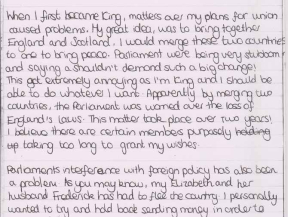
When your pupils use terms such as ‘king’ and ‘Parliament,’ what image do they have in their head? Do they know what they are talking about at all? Do they have a nuanced, period-specific vision of what these terms mean in the context of their current historical studies, and of...
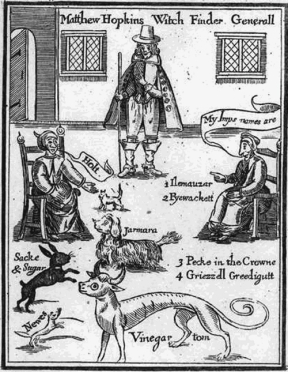
In this article Kerry Apps introduces students to the significance of the witch-hunts in the modern era, at the time when they occurred, and in the middle of the eighteenth century. She presents her rationale for choosing the witch-hunts as a focus for the study of significance, and shows how...
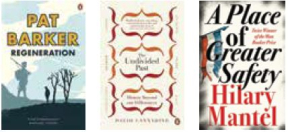
Discussions with sixth-form students about reading led Carolyn Massey and Paul Wiggin to start a sixth-formreading group. They describe here the series of themed sessions that they planned, and the student discussion and reflections that resulted. Listening to their students discuss their reading led Massey and Wiggin to reflect on...
Frustrated that her A-level students were being overly dismissive when asked to judge the convincingness of academic historians’ arguments, Paula Worth drew on previous history-teacher research and theories of history for inspiration. After noting that her students would unjustly reject esteemed historians’ accounts for lack of comprehensiveness, Worth explains here...
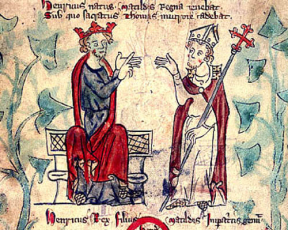
‘The Becket Dispute’ (or ‘Controversy’) refers to the quarrel between Henry II and Thomas Becket, Archbishop of Canterbury, which dominated English ecclesiastical politics in the 1160s. It was a conflict with multiple dimensions: a clash of Church and State; a prolonged struggle between two prominent individuals; a close friendship turned...
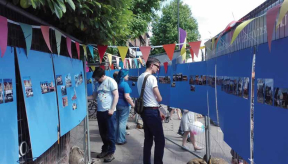
Inspired by the claim that local history can be taught effectively ‘Any time, any place, anywhere’, Katharine Burn and Jason Todd took up the challenge of planning Key Stage 3 enquiries related to an unusual and diverse, but frequently neglected and often despised, corner of Oxford. They sought not merely...
International Journal of Historical Learning, Teaching and Research [IJHLTR], Volume 15, Number 1 – Autumn/Winter 2017 ISSN: 14472-9474 Abstract This study analyses the role of Spanish teacher training students as narrators of what they consider to be the history of Spain. Results of this empirical study are based on a...
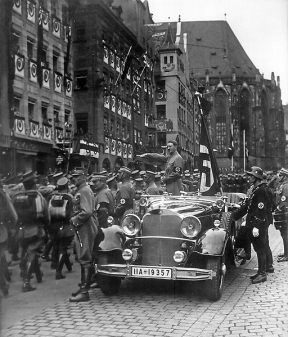
Jim Carroll relished the opportunity, in the new A-level specification he was teaching, to find an effective way of teaching his students to analyse interpretations in their coursework essays. Reflecting on the difficulties he had faced as a trainee teacher teaching younger pupils about interpretations, and dissatisfied with examination board...
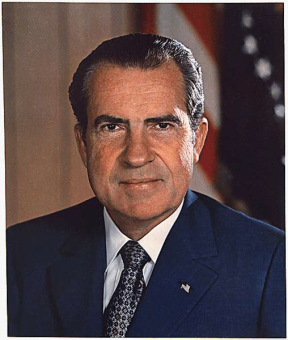
If you know just one thing about the career of the 37th President of the United States, it is likely to be this: Watergate. Nixon’s resignation in August 1974 was caused by his decision to cover up a burglary at the Democratic Party’s campaign headquarters for the 1972 election, which...