
Interpretations
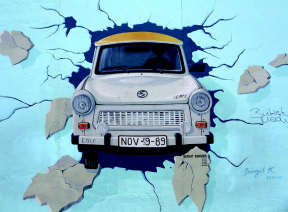
Bjorn Wansink and his co-authors have aligned their teaching of a recent and controversial historical issue – the Cold War – in the light of a contemporary incident. This article demonstrates a means of ensuring that students understand that different cultures’ views of their shared past are nuanced, rather than...
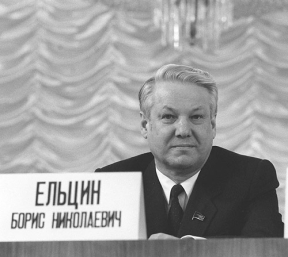
A great deal of new writing on the Cold War sits at the crossroads of national, transnational and global perspectives. Such studies can be so self-consciously multi-archival and multipolar, methodologically pluralist in approach and often ‘decentring’ in aim, that some scholars now worry that the Cold War risks losing its...
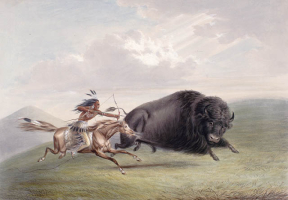
Jess Landy’s desire to introduce her pupils to a more complex narrative of the American West led her to the life story and work of a remarkable individual, George Catlin. In this article she shows how she used this unusual micro-narrative in order to challenge pupils’ ideas not just about...
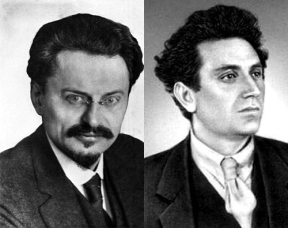
The interpretive and empirical frameworks utilised by scholars in their quest to understand the Russian revolutions have evolved and transformed over 100 years. The opening of archives after the collapse of the Soviet Union enabled access to a swathe of new primary sources, some of which have had a transformative...

My GCSE students were about to embark on their controlled assessment, which asked them to weigh up conflicting views on the British military’s contribution to the D-Day landings. Students were asked to engage with a range of historians’ views and textbooks as well as some contemporary source material to assess...
Julia Huber and Katherine Turner found that their A-level students struggled to identify the line of argument in a passage of historical scholarship, an essential prerequisite for answering their coursework question. They devised an activity that helped students to unpick and visually contrast historians’ interpretations of the relative importance of...

On 23 June, electors in the United Kingdom will vote on whether they wish to remain part of the European Union. The passionate debate around the question has seen the spectre of Hitler and the example of Churchill invoked, with varying plausibility, by both sides. It has also drawn on...
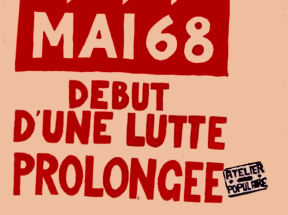
As Kristin Ross has persuasively argued, by the 1980s interpretations of the French events of May 1968 had shrunk to a narrow set of received ideas around student protest, labelled by Chris Reynolds a ‘doxa’. Media discourse is dominated by a narrow range of former participants labelled ‘memory barons’ –...
Dan Smith was concerned that his pupils were drawing on over-simplified generalisations about different periods of the past when they were considering why interpretations change over time. This led him to consider how pupils’ contextual knowledge and chronological fluency might be used more explicitly in order to avoid weak generalisations...
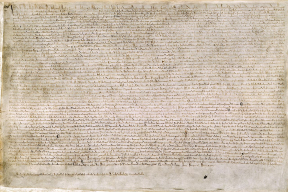
Both Dawson and Hayes have recently written Cunning Plans that show how exciting Magna Carta is. So why not stop there? Bring the barons to life with a flare of Dawson and send Magna Carta flying across the continent with just a hint of Hayes. Hey, from the same edition,...
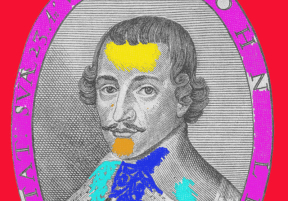
John Lilburne might have been destined for obscurity in less interesting times. He was the second son of a minor gentry family, apprenticed to a London woollen merchant in 1632. It was his master’s connections that drew him into religious opposition to Charles I and the illegal book trade, resulting...
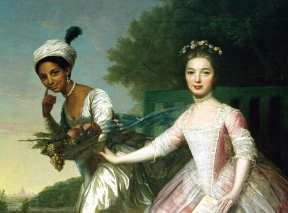
Drawing on her wealth of experience and expertise in using visual sources in the classroom, in this article Jane Card explores how a single painting, a portrait of Dido Elizabeth Belle Lindsay and her cousin Lady Elizabeth Murray, might form the basis for a sequence of lessons. Arguing that although...

While preparing her Year 12 students for an International Baccalaureate paper on early Islam, Kirstie Murray became concerned that students' weaknesses in making claims would be particularly exposed by the challenging complexity of this topic's source record and its contested historiography. Drawing on the practice of other history teachers, especially...
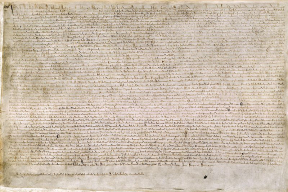
First some history: the question of how historiographic and public historical representations of Magna Carta have changed over the last 800 years is an important one. The ‘myth' of Magna Carta as a foundational document for modern democracy is still very powerful. That tradition of understanding the legacy and history...
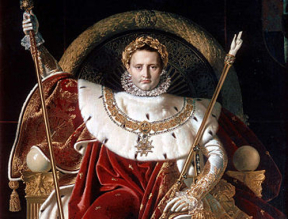
On 18 June 2015, the two-hundredth anniversary of the great battle of Waterloo will be commemorated in Britain and on the continent (though not in France). It will represent the climax of the Napoleonic bicentenary, which has been in full flow since the turn of the twenty-first century. Fresh biographies...
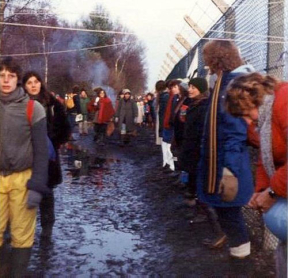
The relationship between the police and the public has long been a key subject in English social history. The formative work in this field was conducted between the 1970s and 1990s, but the past few years have witnessed something of a revival of research in the area. By focusing on...

‘English king Frederick I won at Arsuf, then took Acre, then they all went home': exploring the challenges involved in reading and writing historical narrative Paula Worth draws on three professional traditions in history education in order to build a lesson sequence on the Crusades for her Year 7s. First,...
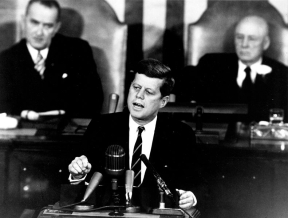
When Michael Fordham was introduced to Dr Seuss's Butter Battle Book he immediately recognised its potential value in the classroom as a popular interpretation of the Cold War. Wanting his Year 9 pupils to explain how and why the past has been interpreted in different ways he shows the potential...

This page is for those new to the published writings of history teachers. Every problem you wrestle with, other teachers have wrestled with too. Quick fixes don't exist. But if you discover others' writing, you'll soon find - and want to join - something better: an international conversation in which...
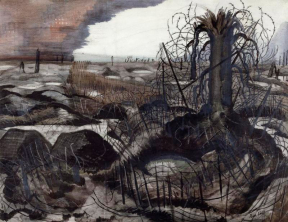
A world turned molten: helping Year 9 to explore the cultural legacies of the First World War Rachel Foster shows how her own study of cultural history led to a new dimension in her planning. She wanted to show her students not only that historians are interested in many different...